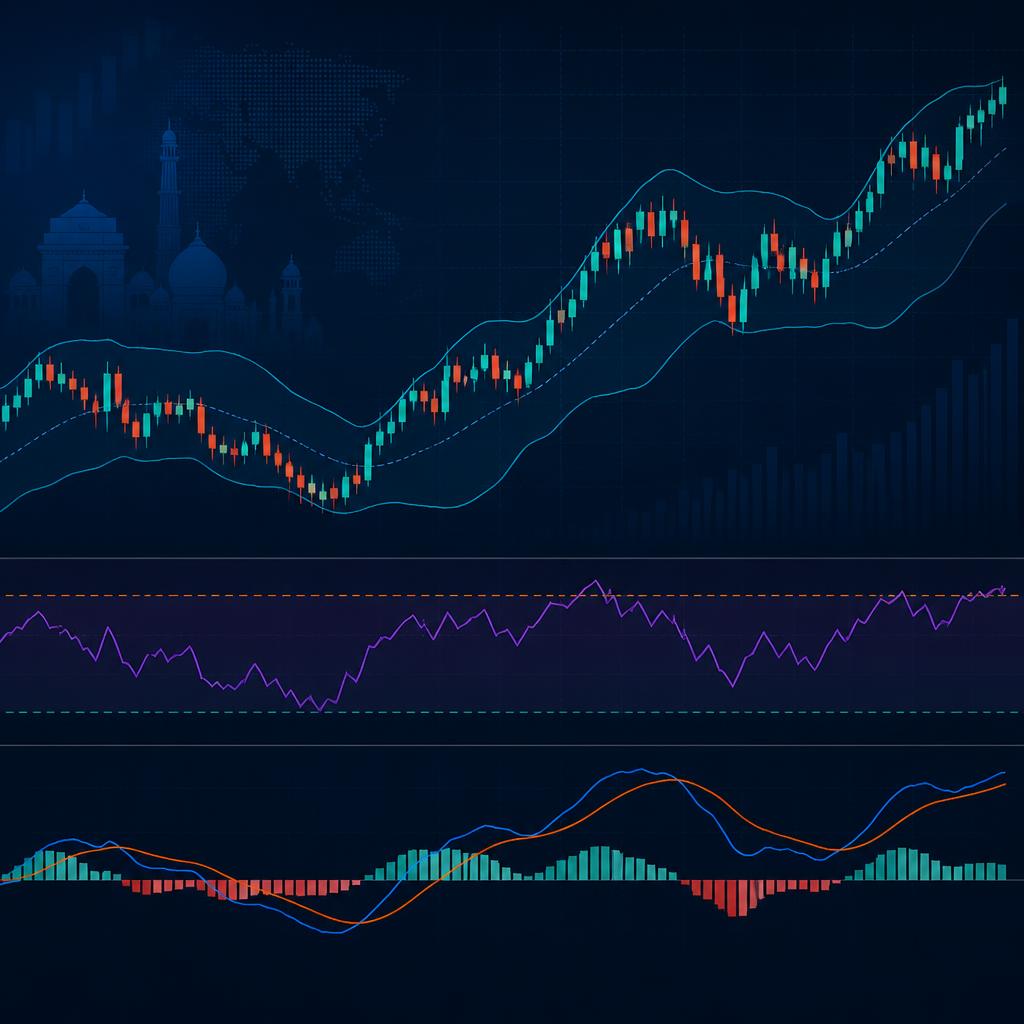
What a trading journal is designed to capture
A useful trading journal records what you believed, what you knew, and what you planned before the outcome was visible. For an intraday idea, that can include the symbol, date and time, setup name, timeframe, entry and exit plan, index and sector context, news timing, volume, VWAP, EMA, support, resistance, and the reason the idea deserved attention. The goal is not to write the longest note. The goal is to preserve decision context.
A journal also records uncertainty. If data was delayed, a source was not verified, or the setup was missing a required confirmation, write that down. A clean record of uncertainty is more useful than a confident note that hides a limitation. Stock Smart Scanner keeps the journal inside the authenticated workspace so personal research records remain separate from these public educational pages.
Write the setup before the result
Outcome bias makes a profitable result look like proof that the original reasoning was correct. The reverse is also true: a losing result can make a careful decision look careless after the fact. Writing the setup before the result protects the review from both errors. Describe the condition, timeframe, reason for entry, invalidation, and evidence that would change your view.
Use plain language that another version of you could understand later. Instead of writing that a stock was strong, record the completed candle, level, volume comparison, index direction, and next resistance. Specific notes make it possible to compare similar decisions across sessions. They also reveal when the same label was being used for different market situations.
Record market and news context
The same technical pattern can behave differently in a trending index, a narrow range, a high-volatility news session, or a weak sector. Add enough context to explain the environment without turning the journal into a news archive. Note the relevant index direction, sector behavior, volatility, and whether a company or policy event was published near the decision.
Context is not a reason to rewrite the trade after the fact. It is a way to check whether the original explanation was complete. If you wrote that the setup was company-specific, compare it with peers. If you wrote that it was sector-led, check participation. If a headline changed the plan, preserve the time of the change and the source you used.
Review process quality separately from P&L
Profit and loss are important records, but they are not a complete measure of decision quality. A disciplined trade can lose because the market did not follow the hypothesis. An undisciplined trade can win by chance. Review whether the setup matched defined rules, whether the data was current, whether the risk boundary was known, and whether the exit followed the plan or an unrecorded impulse.
Useful review questions include: Did I enter before the candle completed? Did I ignore nearby resistance? Did I increase size after a loss? Did I change the timeframe to justify the idea? Did the source or news context support the claim? These questions turn a journal into a feedback system and help distinguish a strategy issue from an execution issue or a data-quality issue.
Use tags and consistent fields
Consistent fields make a journal searchable and comparable. Choose a small set of tags such as breakout, VWAP reclaim, EMA trend, range failure, news reaction, or market-context mismatch. Keep the same spelling and define what each tag means. Add a confidence or evidence field only if you can explain the scale; an unexplained score can create another source of noise.
Do not add every indicator simply because the form allows it. A journal should support the decisions you actually make. If a field never changes the review, remove it or make it optional. The strongest journal often has a short pre-trade thesis, a clear invalidation, a brief execution note, and a post-session review of what the market showed.
Keep personal records private and organized
A trading journal may contain personal habits, financial context, watchlist decisions, and reflections that should not be public. The authenticated Journal workspace is separate from this public feature article. Public visitors can learn what the tool is for, but they cannot browse another user’s entries. Keep passwords, broker secrets, one-time codes, and private credentials out of journal notes.
Export or archive records only through trusted account workflows, and review access carefully if you share screenshots or reports. Privacy does not make a journal accurate by itself. It gives you a safer place to record the process honestly. Use the record to improve decisions, not to publish a performance claim without the time period, methodology, costs, and risks that would make the claim meaningful.
A practical daily journaling routine
Before the session, write the market question and setups you are willing to study. During the session, create the entry while the evidence is visible and add the timestamp. After the session, write a short review: what matched, what changed, what invalidated the idea, and what you would verify next time. Keep the first note unchanged so the later review does not overwrite the original reasoning.
Once a week, group entries by setup, market condition, time of day, and process error. Look for repeated behaviors rather than one dramatic result. Maybe the issue is entering before confirmation, trading near a major level, ignoring spread, or changing the plan after news. A journal creates value when it changes a future checklist, not merely when it stores a past event.
A journal is a learning tool, not a promise
No journal can remove uncertainty or guarantee better returns. It can make assumptions visible, preserve evidence, and reduce the tendency to remember only the most emotional trades. Use it alongside the scanner, market news, charts, and primary sources, while keeping each source’s limits clear.
Stock Smart Scanner provides an informational research workspace. It does not manage money, execute real orders, or provide personalized investment advice. This public article explains a process for reflection; the private tool is where an authenticated user can keep their own records and decide how to use them responsibly.
Continue your research
- Intraday SetupDefine the setup before recording it.
- Paper TradingPractice order workflows separately from real accounts.
- Stock Smart Scanner Knowledge BaseBrowse the public research and process library.
Authoritative references
Use primary exchange and regulator sources to verify material claims.
- SEBI InvestorReview official investor education and risk material.
- NSE IndiaUse the exchange site when verifying market information.